
If you have Hashimoto’s and you are also dealing with Raynaud’s, dry eyes and dry mouth, numbness or weakness, gut pain, palpitations, anxiety, weight issues, and you keep collecting new “possible diagnoses” every year, I want you to hear this clearly.
This is not rare.
This is not random.
This is a very common autoimmune cluster.
And it is exactly why so many smart, motivated people feel like they are losing their mind inside the current medical system.
Because the system is built to name one branch at a time.
Meanwhile, your body is in a full-body immune storm.
Mallory’s story is a powerful example of that pattern.
Mallory’s Story: A Common and Misunderstood Pattern
Mallory was 36, a busy working mom with three kids. She was diagnosed with Hashimoto’s and then watched her health unravel.
Over roughly three years she experienced:
Severe Raynaud’s, hands and feet turning white, cold, painful, even in warmer months
Dry eyes and dry mouth so intense it felt extreme and constant
Gut pain, nausea, severe weight loss, to the point she was eating baby food just to tolerate something
Palpitations and episodes where she felt she might pass out walking
Neurologic symptoms, including a leg going numb enough to require disability leave
A long list of “it could be Sjogren’s,” “it could be lupus,” “it could be MS,” without anyone tying it together
She did what most high-effort patients do.
She listened to all the podcasts.
She researched obsessively.
She tried strict AIP for two years.
She hired multiple doctors, including functional MDs.
She ran scopes, imaging, labs.
And she kept getting worse.
This is where the takeaway matters.
When someone is doing “all the right things” and still deteriorating, it is almost never because they are lazy or failing.
It is because the framework is incomplete, or the order is wrong, or both.
The Big Takeaway: These Diagnoses Often Travel As A Cluster
Here is what I want you to notice about Mallory’s symptom set.
Hashimoto’s is one autoimmune target, the thyroid.
Raynaud’s is another autoimmune target, the blood vessels and circulation.
Sjogren’s symptoms involve dryness, which can reflect immune attack patterns, nervous system patterns, and systemic inflammation.
Lupus symptoms often overlap with broad inflammatory and autoimmune patterns.
MS scares often show up when there are neurologic symptoms like numbness, weakness, and white matter changes.
Different branches. Same trunk.
In real life, a lot of people do not have one neat autoimmune diagnosis.
They have an autoimmune terrain.
And it can express as multiple targets over time.
That is why Mallory’s labs being “not positive enough” did not change the reality of what was happening in her body.
A critical clinical point Dr Maggie teaches is this: we can only confirm a small percentage of autoimmune targets with standard bloodwork. Many autoimmune patterns are symptom-defined long before a lab gives you permission to take it seriously.
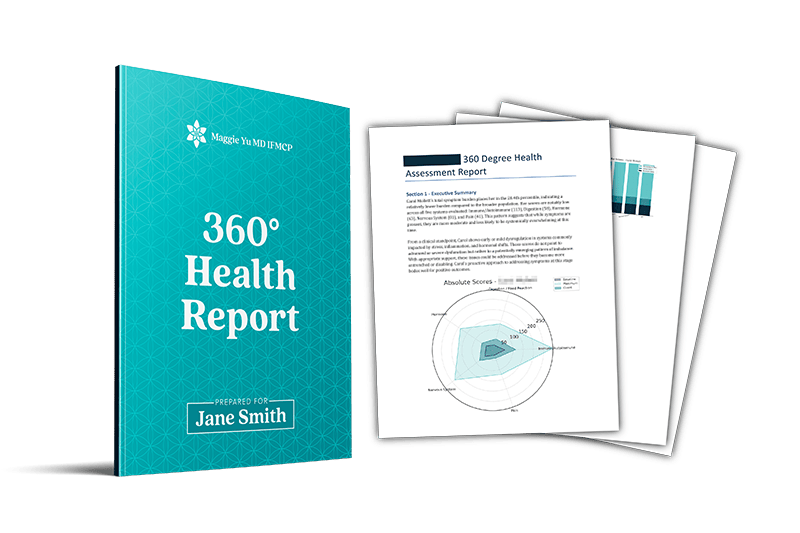
Take The 360° Health Assessment
Our 360° Health Assessment is designed for individuals ready to understand their health and take the next step forward.
Why Raynaud’s Is Not “Just Raynaud’s” In Hashimoto’s
This is one of the most important education points from Mallory’s case.
Raynaud’s is not just cold hands.
It is reduced blood flow, vascular spasm, nerve irritation, and inflammatory signaling.
It changes your entire day.
People plan their lives around warmth, layers, heaters, avoiding grocery stores, avoiding air conditioning, avoiding anything that triggers cold exposure.
And a lot of people are told it is “normal,” “benign,” or “just something you have.”
Mallory’s Raynaud’s improved dramatically within about six months of applying the right framework, with continued improvement expected over 6 to 12 months because nerves and circulation take time to heal.
That does not happen by accident.
What Actually Moved The Needle: The 5 Takeaways You Can Apply
Mallory said two things clearly helped her most, and they map to what Dr Maggie sees repeatedly in autoimmune clusters.
Takeaway 1
Blood sugar instability can drive autoimmune flares even on a “perfect” diet
Mallory did strict AIP and did not cheat.
But her meals were sporadic because life was busy and food access was limited.
That meant her blood sugar was swinging all day.
Blood sugar swings are not just a weight issue. They are an immune trigger.
They can drive palpitations, anxiety, sleep disruption, inflammation, and flares across multiple autoimmune targets.
If you are eating “healthy” but you are skipping meals, delaying meals, or eating too little protein, you can still be feeding the autoimmune storm.
Takeaway 2
Food restriction is not the same as food precision
Mallory was strict for years. Still got worse.
When she used data to identify true triggers, she was able to reintroduce foods and expand her diet, not restrict it further.
This matters because long-term restriction without precision can backfire through:
Stress chemistry
Nutrient deficiencies
Worsening resilience
Worsening blood sugar stability
More fear around food
Takeaway 3
Mallory uncovered severe PCOS and patterns of estrogen dominance.
Hormones are not optional in autoimmune recovery, especially with PCOS
This is common.
Hormones are immune modulators. When hormones are off, symptoms amplify.
Many people never get proper hormone interpretation, and many are told they do not need testing because they are “normal.”
Functional pattern recognition is different.
Takeaway 4
Nutrient deficiencies can mimic and worsen scary symptoms
Mallory saw major improvement after addressing key deficiencies like B12 and D3.
Deficiencies can worsen:
Palpitations and tachycardia patterns
Neurologic symptoms, including numbness and weakness
Immune regulation
Mood stability and resilience
Takeaway 5
You cannot whack-a-mole this
Mallory said it plainly. She was trying to hire the right doctor for each symptom and then stitch it together herself.
That model burns people out.
Autoimmune clusters require an integrated framework, in the right order, not isolated symptom chasing.
Online Training
A New Look at Autoimmune Healing
Research-backed insights into rheumatoid arthritis, Hashimoto’s, lupus, fibromyalgia, and more.
The Emotional Takeaway: Symptoms Create Anxiety, Not The Other Way Around
One of the most important moments in this conversation is when Mallory explains that she was starting to feel “crazy” because she could feel what was happening, but tests kept coming back “fine,” and people started pushing anxiety meds.
This is a huge theme in autoimmune clusters, especially in women.
Dr Maggie’s stance is direct:
Many people do not get anxious and then develop symptoms.
They become anxious because they are symptomatic, dismissed, and unsupported.
That distinction matters.
Because when you start treating the symptoms correctly, the anxiety often drops dramatically.
If You See Yourself In This, You Are Not A Rare Unicorn
If you have:
Hashimoto’s
Raynaud’s
Dry eyes or dry mouth
Gut pain, nausea, unexplained weight issues
Palpitations, tachycardia, near-fainting
Numbness, weakness, “MS fear”
Autoimmune symptoms that do not fit neatly into one diagnosis
You are not alone.
This cluster is common.
It is predictable.
And it can improve when you stop chasing branches and start addressing the trunk.
Conclusion
If you want help identifying your autoimmune cluster pattern, and you want a clear, logical order of what to address first, book a 360 HealthAssessment 1:1 Results Call.
This is where we map your symptom pattern, your likely drivers, and the next right steps so you can stop guessing and stop spiraling.