
Epstein Barr virus (EBV), also known as mono, can alter immune cells and raise autoimmune risk. Learn how EBV connects to lupus, MS, POTS, fibromyalgia, thyroid issues, and histamine symptoms, plus what to do next.
What Is Epstein Barr Virus (EBV)?
Epstein Barr virus, often shortened to EBV, is a member of the herpes virus family. That same viral family includes cytomegalovirus (CMV), herpes simplex viruses, and the chickenpox-shingles virus.
EBV is the virus that causes mono.
Many people remember mono as extreme teenage fatigue, swollen lymph nodes, and feeling sick for weeks. Others never realized they had it at all.
What makes EBV different from a simple cold?
EBV Stays in the Body for Life
Once you are infected with EBV, it does not completely leave. It can remain dormant in immune cells for decades. For most people, this is not a problem.
But for some individuals, especially those genetically predisposed to immune dysregulation, EBV becomes more than a past infection.
It becomes a turning point.
The Research Linking EBV and Autoimmune Disease
In recent years, research has increasingly connected Epstein Barr virus with autoimmune diseases including:
- Lupus
- Multiple sclerosis (MS)
- Rheumatoid arthritis
- Sjogren’s syndrome
- Hashimoto’s thyroiditis
- POTS and dysautonomia
- Fibromyalgia patterns
In multiple sclerosis research, nearly every individual diagnosed with MS shows evidence of prior EBV infection.
That does not mean EBV alone causes MS.
It means EBV may be a necessary trigger in susceptible individuals.
How Epstein Barr Virus Alters the Immune System
The most important question is not “Did you have mono?”
The real question is:
What did EBV do to your immune system?
EBV Infects B Cells
EBV is known for infecting B cells, a key immune cell responsible for producing antibodies and labeling threats.
If B cell signaling becomes distorted, the immune system can begin labeling your own tissues as foreign.
That is the foundation of autoimmune disease.
Molecular Mimicry and Immune Confusion
Certain proteins on the Epstein Barr virus resemble human proteins closely enough to confuse the immune system.
In lupus, for example, specific autoantibodies target proteins that have structural similarities to viral proteins. This resemblance can contribute to immune cross-reactivity in genetically susceptible individuals.
The immune system may not always distinguish between “virus” and “self.”
EBV and the Thyroid: A Frequently Missed Connection
The thyroid is one of the most common autoimmune targets.
If you have autoimmune disease of any kind, your thyroid should not be assumed normal based on one TSH test.
Why the Thyroid Is Vulnerable
Hormone-producing organs are frequent autoimmune targets. The thyroid is especially sensitive to immune shifts triggered by infections.
After EBV, shingles, or COVID, many individuals develop:
- Hashimoto’s thyroiditis
- Graves’ disease
- Thyroid nodules or cysts
- Persistent hair loss
- Cold intolerance
- Brain fog
- Mood changes
Autoimmune attack against the thyroid is rarely isolated. It often overlaps with ovarian, adrenal, and brain hormone disruption.
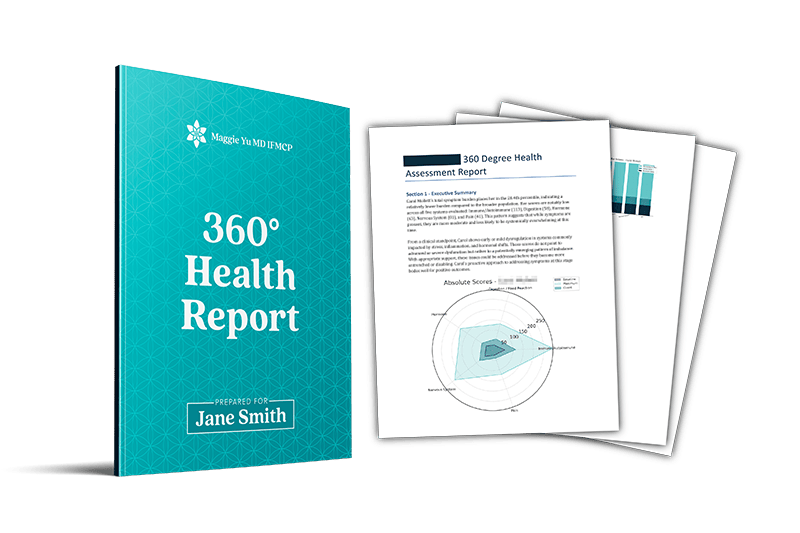
Take The 360° Health Assessment
Our 360° Health Assessment is designed for individuals ready to understand their health and take the next step forward.
EBV, POTS, and Dysautonomia
Many individuals diagnosed with POTS or dysautonomia report a viral trigger.
EBV, mono, and other viral infections can precede:
- Tachycardia
- Dizziness
- Exercise intolerance
- Temperature dysregulation
- Severe fatigue
The immune system does not exist in isolation. When it becomes dysregulated, the autonomic nervous system often follows.
EBV and Histamine Intolerance or MCAS
After viral infections, many patients develop:
- New food reactions
- Fragrance sensitivity
- Hives or flushing
- Mold reactivity
- Mast cell activation symptoms
The Allergy Branch of the Immune System
The immune system has multiple branches. One branch governs allergic responses.
When viruses infect immune cells, they can dysregulate this branch, increasing histamine sensitivity and mast cell reactivity.
This is why some people feel like their body “changed overnight” after mono or another viral illness.
The Fatal Flaw: Chasing EBV Titers
Once people learn about the EBV-autoimmune connection, they often assume the next step is aggressive antiviral treatment or repeated antibody testing.
Here is the problem.
EBV Antibodies Can Stay Elevated for Years
EBV antibody tests can remain positive or elevated long after initial infection. Titers may fluctuate without clearly indicating active disease.
Obsessing over antibody numbers does not always move the clinical needle.
The more productive question is:
What immune pattern is active now?
What Actually Matters After EBV Infection
If EBV is the trigger, what comes next matters more.
Hormone Disruption
Autoimmune disease frequently overlaps with hormone dysregulation including:
- Thyroid dysfunction
- Early menopause
- Low testosterone
- Adrenal stress patterns
- Brain hormone imbalance
Hormones fluctuate. Immune systems respond to fluctuations. This creates amplification loops.
Gut and Digestive Hormone Disruption
The gut produces hormones that coordinate digestion, liver function, and immune signaling.
After viral triggers, individuals often experience:
- IBS
- Gastroparesis
- Food intolerance
- Diverticulitis patterns
- Colitis or inflammatory bowel patterns
Mitochondrial and Energy Dysfunction
Chronic fatigue and brain fog are not imaginary.
Viral infections can affect mitochondrial function, altering how cells generate energy. This contributes to long-haul fatigue patterns.
Online Training
A New Look at Autoimmune Healing
Research-backed insights into rheumatoid arthritis, Hashimoto’s, lupus, fibromyalgia, and more.
Are You Doomed If You Had EBV?
No.
EBV may be a trigger. It is not a life sentence.
What determines outcome is:
- Genetic susceptibility
- Immune regulation
- Hormone balance
- Gut integrity
- Detox capacity
The order in which problems are addressed
This is not a one-trick pony solution.
It is pattern recognition.
When to Consider a Deeper Evaluation
If you have:
- Multiple autoimmune diagnoses
- A history of mono or severe viral illness
- POTS or dysautonomia
- Histamine or MCAS symptoms
- Thyroid issues despite “normal labs”
- Brain fog that never resolved
You may be dealing with immune pattern disruption triggered by EBV.
360 Health Assessment
Understanding viral triggers is powerful only if it leads to a personalized plan.
If you want clarity on:
- What your immune system is targeting
- What hormone patterns are being missed
- Why symptoms overlap
- What order to address them in
Start with a 360 Health Assessment.
We review your symptom history, immune triggers, hormone patterns, and map what is most likely being missed.
Book your 360 Health Assessment here.
Maggie Yu, MD IFMCP
FAQs
Can Epstein Barr virus cause autoimmune disease?
EBV is strongly associated with autoimmune conditions in research. It appears to act as a trigger in genetically susceptible individuals.
Does everyone with EBV develop autoimmune disease?
No. Most people carry EBV without developing autoimmune illness. Susceptibility and immune regulation matter.
Should I retest EBV antibodies repeatedly?
No, repeated titers are not the most clinically useful metric. Pattern assessment is more actionable.
Can EBV affect the thyroid?
Yes. Thyroid autoimmunity frequently overlaps with viral triggers, including EBV.
Is long-term remission possible after viral-triggered autoimmunity?
Yes. With correct pattern identification and system-based intervention, significant symptom improvement and remission are possible.