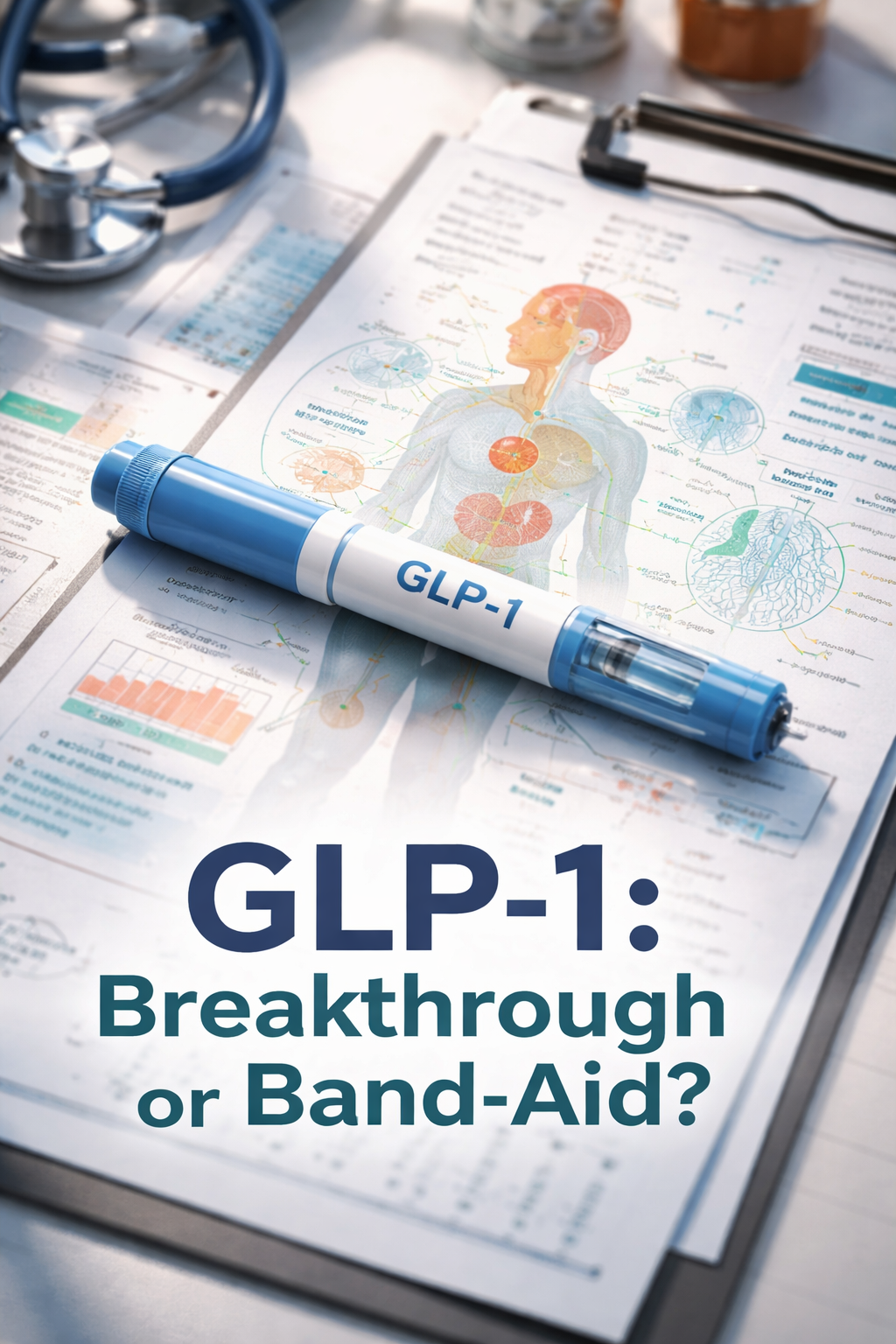
GLP-1 medications are everywhere right now.
Ozempic. Wegovy. Mounjaro. Zepbound.
You cannot open social media, watch television, or sit in a doctor’s office without hearing about them. Millions of people are now taking these medications for weight loss, diabetes, and metabolic health.
Some call them the greatest medical breakthrough of the decade.
Others call them dangerous.
Patients are confused.
Doctors are divided.
The internet is very loud.
So where do I stand?
As a physician who specializes in complex chronic illness, hormone dysfunction, autoimmune disease, POTS, and metabolic dysfunction, I see the reality of these medications every day in clinical practice.
The truth about GLP-1 medications is not simple.
They are powerful tools.
They are also powerful hormones.
And when hormones are used without understanding the body's entire system, problems follow.
Let’s break down what is actually happening.
What GLP-1 Medications Actually Are
GLP-1 stands for glucagon-like peptide-1.
It is a hormone naturally produced in the gut that plays a major role in regulating metabolism.
GLP-1 controls several critical functions in the body:
- Insulin release
- Blood sugar regulation
- Appetite signaling
- Gastric emptying
- Brain satiety signals
When GLP-1 levels rise after eating, the body receives the signal that it is full.
These medications mimic that signal.
The result is powerful.
People eat less.
Blood sugar improves.
Weight often drops rapidly.
That combination explains why these medications have exploded in popularity.
But appetite control is only one small part of the story.
Why So Many People Are Taking GLP-1 Drugs
GLP-1 medications originally entered the market as diabetes drugs.
Doctors quickly noticed something else.
Patients were losing significant weight.
Now these medications are used by several groups:
People with type 2 diabetes.
People with obesity and metabolic syndrome.
People trying to lose weight after years of dieting frustration.
And increasingly, people who are otherwise healthy but want rapid cosmetic weight loss.
This last group is growing fast.
And it is where the conversation gets more complicated.
Because GLP-1 drugs are not simple appetite suppressants.
They are hormone therapies.
GLP-1 Is Not Just a Weight Loss Drug. It Is a Hormone.
Every hormone in the body interacts with other hormones.
Nothing in physiology operates in isolation.
GLP-1 influences:
- insulin
- glucagon
- cortisol
- thyroid function
- sex hormones
- neurotransmitters
When you change one hormone signal, the entire metabolic orchestra adjusts.
In well-selected patients, this shift produces tremendous benefit.
In poorly selected patients, it creates instability.
This is where modern medicine often fails.
The Biggest Problem Doctors Are Missing: Patient Selection
Most people starting GLP-1 medications receive very little metabolic evaluation beforehand.
A patient walks in, asking for help with weight loss.
A prescription follows.
No investigation.
No deeper questions.
Yet many people seeking GLP-1 medications already have complex metabolic issues:
- autoimmune disease
- thyroid dysfunction
- chronic fatigue
- insulin resistance
- hormone imbalance
- digestive disorders
- POTS or dysautonomia
These underlying conditions shape how the body responds to hormonal therapies.
Ignoring them creates problems.
When you introduce a powerful metabolic hormone into an unstable system, the downstream effects multiply.
One of the most important areas affected is digestion.
The Digestive System Problem Nobody Is Talking About
GLP-1 medications slow gastric emptying.
That is how they work.
Food stays in the stomach longer.
Satiety increases.
Appetite drops.
But digestion is not designed to move slowly forever.
When gastric emptying slows too much, symptoms appear:
- constipation
- bloating
- reflux
- nausea
- abdominal discomfort
- severe constipation requiring ER visits
In extreme cases, gastroparesis develops, where the stomach struggles to empty food at all.
Now connect this to what we already see in patients with chronic illness.
Many people already have compromised digestion:
Low stomach acid
Poor pancreatic enzyme production
Gallbladder dysfunction
Intestinal permeability
Microbiome imbalance
When digestion is already fragile, slowing the entire system pushes it into dysfunction.
Food sits longer.
Fermentation increases.
Inflammation rises.
Symptoms follow.
Muscle Loss: The Silent Metabolic Cost
Rapid weight loss looks impressive on the scale.
But the scale does not reveal what type of weight the body is losing.
GLP-1 medications dramatically reduce appetite.
Many people eating on these medications consume far less protein than their bodies require.
Without adequate protein intake and resistance training, the body breaks down muscle.
Muscle loss creates several long-term problems:
Metabolic rate drops.
Strength declines.
Bone density falls.
Recovery capacity decreases.
Muscle is not cosmetic tissue.
It is metabolic tissue.
When muscle disappears, metabolism weakens.
Blood Sugar Chaos: The Irony of GLP-1 Drugs
GLP-1 medications lower blood sugar.
But appetite suppression also reduces food intake dramatically.
Some patients now eat far too little throughout the day.
The result is unstable blood sugar patterns:
- Headaches
- Dizziness
- Palpitations
- Brain fog
- Night sweats
- Energy crashes
Instead of steady metabolic function, the body swings between low intake and stress hormone compensation.
That pattern is particularly destabilizing for people already struggling with autonomic nervous system disorders.
The Gut Microbiome Connection
Your gut microbiome influences nearly every aspect of metabolism.
Certain bacteria help regulate:
- insulin sensitivity
- inflammation
- energy extraction from food
- satiety signals
When digestion slows dramatically, the microbial ecosystem shifts.
Different bacteria thrive under slower transit times.
Some beneficial strains decrease.
Others expand.
That microbial shift influences metabolism, immune function, and inflammation levels.
This is one reason some people experience digestive discomfort and inflammation when using GLP-1 medications long term.
When GLP-1 Medications Are Extremely Helpful
GLP-1 medications are not villains.
In the right context, they are extremely useful.
Patients with:
- severe insulin resistance
- metabolic syndrome
- uncontrolled diabetes
- obesity driven by appetite dysregulation
often experience meaningful metabolic improvement.
Blood sugar stabilizes.
Inflammation drops.
Weight reduction reduces cardiovascular risk.
These benefits are real.
But success requires the right context and proper support.
When GLP-1 Medications Create Bigger Problems
GLP-1 medications create more complications when they are used in bodies that already have systemic instability.
Higher risk groups include individuals with:
Autoimmune disease
Chronic fatigue syndromes
POTS or dysautonomia
Hormone imbalance
Thyroid dysfunction
Severe digestive disorders
These individuals often require a broader metabolic strategy before introducing hormone-based therapies.
Otherwise, symptoms worsen.
The Right Way to Use GLP-1 Medications
If someone chooses to use GLP-1 medications, the goal is not simply appetite suppression.
The goal is metabolic stability.
Several foundational supports are essential.
Strong digestion.
Adequate protein intake.
Hydration and electrolyte balance.
Muscle preservation through resistance training.
Stable blood sugar regulation.
Gut microbiome support.
These foundations protect metabolism while the medication performs its intended function.
Without these supports, the body struggles to maintain balance.
The Bottom Line
GLP-1 medications are powerful tools.
They change hormone signaling.
They alter digestion.
They reshape appetite and metabolism.
In the right patient, they help restore metabolic control.
In the wrong patient, or without proper support, they create new layers of dysfunction.
This is why a root cause, systems-based approach matters.
The body does not operate in isolated compartments.
Hormones, digestion, metabolism, and immune function constantly interact.
When you understand the system, better decisions follow.
Supporting Your Body While Using GLP-1
If you are using a GLP-1 medication, your body needs support in several key areas.
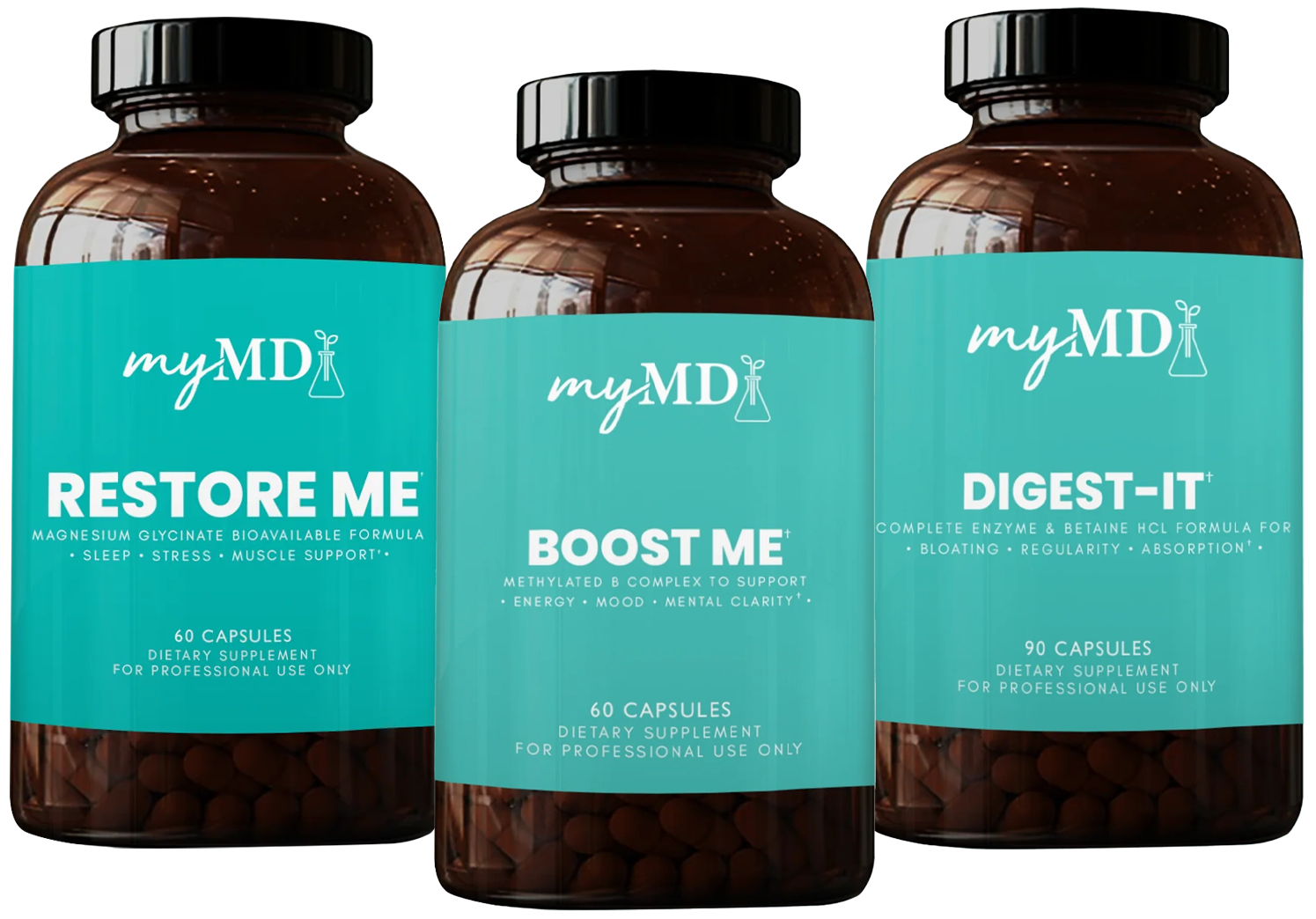
Digestion must stay functional.
Protein intake must remain adequate.
Muscle mass must be protected.
Blood sugar must stay stable.
This is exactly why I created the GLP-1 Support Guide.
The guide focuses on the foundational systems that GLP-1 medications affect most:
- digestion and nutrient absorption
- metabolic energy production
- nervous system stability
• electrolyte and hydration balance
Download my GLP-1 Support Guide here
The goal is simple.
Protect the body while powerful medications are doing their job.
Because when metabolism stays supported, the results are far more sustainable.