
If you feel like you have been handed three different diagnoses that all describe the same miserable experience, you are not imagining it.
Long Haul COVID and POTS share a huge overlap of symptoms, and in many people, POTS shows up after COVID. Add MCAS into the mix and it can feel like your body has turned into a full-time emergency.
Kim’s story is a perfect example of how this pattern happens, why so many specialists get stuck in trial-and-error, and how we solved it by targeting the drivers they were not even looking at.
Kim’s Story: From Walker to Wheelchair Planning
When I met Kim, she was not casually “dealing with symptoms.”
Her symptoms were so severe she was using a walker, and even that was not enough. She was struggling in lines and preparing for a wheelchair. She was not sure how much longer she could keep working.
Then, one week before she started our program, she caught COVID for the second time. She ended up in the ER the day before beginning.
This matters because it is one of the most common patterns I see.
A viral hit, especially COVID, acts like a trigger that flips a vulnerable system into a chronic spiral of dysautonomia symptoms.
Kim came in with three diagnoses that often travel together:
- POTS
- Long Haul COVID
- MCAS
If you have one, it is worth asking whether the other two are part of the same pattern.
The Big Idea: POTS and Long Haul Can Be the Same Fire, Just a Different Label
Most people think of POTS and Long Haul as separate conditions.
Clinically, I see them as overlapping expressions of nervous system dysregulation after immune disruption.
When the autonomic nervous system is unstable, symptoms can look like:
- Heart rate spikes
- Breathlessness
- Dizziness and lightheadedness
- Palpitations
- Crashes
- Exercise intolerance
- Temperature swings
- Brain fog
- Sleep disruption
- Gut slowing, reflux, nausea
- Histamine type reactions, flushing, swelling, food reactions
That list describes POTS. It also describes Long Haul. And it often describes MCAS.
So instead of asking, “Which one do I have?” a better question is:
What flipped my nervous system and immune system into this pattern, and what is keeping it stuck?
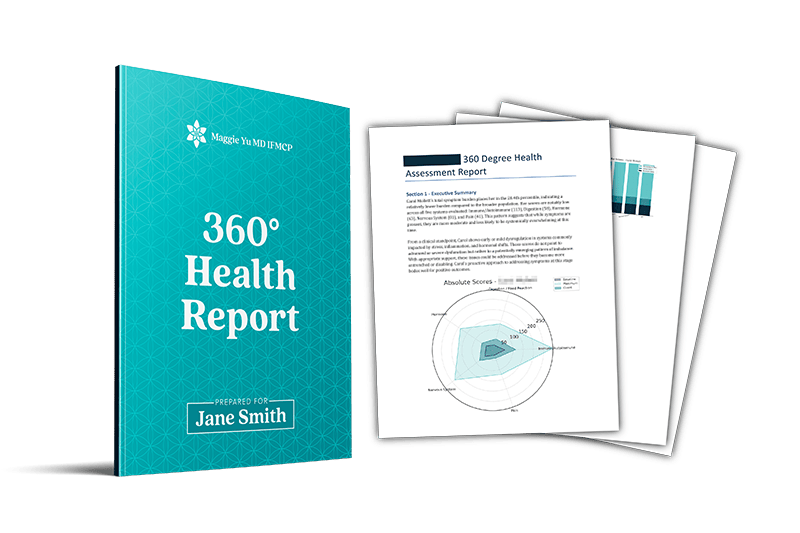
Take The 360° Health Assessment
Our 360° Health Assessment is designed for individuals ready to understand their health and take the next step forward.
Kim’s Timeline Shows What Most People Miss
Kim was diagnosed with Long COVID quickly after her first COVID infection.
Her infection felt mild. She got through it.
Then on day eight she woke up and could not breathe. ER visit. Then another. Then another. She had around 10 ER visits that year.
Four months later, she was diagnosed with POTS.
A year and a half after that, she was diagnosed with MCAS.
This is common.
People often get one diagnosis first, then the next, then the next, because the medical system labels symptoms based on whichever specialist you happen to see.
But the pattern underneath is often the same pattern the whole time.
The Early Signs Were There Before COVID
Kim also did something very important during her time with us.
She looked back.
And she realized her symptoms did not truly start with COVID. Early signs showed up around 2019, when she was about 35.
Her blood pressure was high at a routine visit.
She tried gentle walks. Her heart rate shot up to 170 from walking to the mailbox.
Her doctor asked one question.
“Is it staying there?”
When Kim said it came back down, the doctor dismissed it.
That is also common.
Early nervous system instability is often dismissed because the symptoms come and go. That does not mean they are harmless. It often means the system is dysregulated, not broken.
Six months later she had palpitations and a cardiac workup.
Then the specialist parade began. Around 10 specialists, including Mayo Clinic, cardiology, neurology, allergy, and a mast cell specialist.
And what did she learn?
“We do not really know. It is trial and error.”
That is exactly why so many people feel stuck.
H2: What Was So Common About Kim’s Case
Kim’s story is not rare. It is a blueprint.
Here is what I see in case after case of POTS after COVID and Long Haul dysautonomia:
- A body that had early warning signs before the major crash
- A post viral trigger that tipped the system over
- Gut dysfunction that amplifies immune reactivity and histamine issues
- Hormone patterns that worsen nervous system stability
- Blood sugar instability that becomes a symptom amplifier
- Nutrient deficiencies that never get corrected because digestion is broken
When you only treat the symptoms, you chase your tail.
When you address the drivers in the right order, people get their lives back.
How We Solved It: We Stopped Treating Labels and Started Fixing the Drivers
Kim said something that made me laugh because it was so accurate.
She told me it felt like I “undid everything conventional medicine had done.”
She was on multiple medications, including Pepsid and birth control.
Here is the part that matters.
I am not anti-medication. I am anti anything that makes you worse or blocks root-cause recovery.
In Kim’s case, those medications were major contributors to the stuck pattern.
Driver 1: Digestion Was a Pinnacle Issue
Pepsid suppresses stomach acid.
For someone like Kim with complex chronic symptoms, it can become a problem because low stomach acid contributes to:
- Poor protein breakdown
- Poor mineral absorption
- Slower motility
- Higher risk of gut infections
- More food reactions
- More histamine load over time
Kim had gut inflammation from her esophagus to her small intestine on scope, yet no one could explain why. Biopsies were “clear,” so she was left with, “We do not know.”
She also had a fat digestion problem, and her gut was slowing down significantly. She was even being sent for swallow testing.
Later we found SIBO, a bacterial overgrowth pattern that is incredibly common in dysautonomia and MCAS cases because motility slows and the gut becomes a breeding ground.
When we began addressing digestion and treating the SIBO pattern, she went into remission and her symptoms dropped dramatically.
Kim also avoided an unnecessary gallbladder removal. That is worth saying out loud.
Removing organs is not a digestion plan. Fixing digestion is.
Driver 2: Hormones Were Clearly Part of the POTS Pattern
Kim had been on birth control due to ovarian cyst history. She suspected her hormones were “a mess.”
A cardiologist even commented that she looked like she had PCOS.
Yet when she asked her gynecologist to test hormones, she got a blood test and then a phone call.
“Normal.”
This is one of the biggest traps.
Standard hormone testing, done at the wrong time, using the wrong markers, interpreted without pattern recognition, frequently misses what matters.
When we tested properly and evaluated the pattern, Kim had:
PCOS pattern markers
Estrogen dominance pattern
Adrenal stress pattern
Other hormone dynamics that can drive POTS-like symptoms, including thyroid and blood sugar hormone instability
Once we addressed those patterns, things shifted.
Driver 3: Blood Sugar Control Became Her Symptom Safety Switch
Kim said something that I wish every person with POTS and Long Haul would tattoo on their planner.
The only time she really has symptoms now is if she does not balance her blood sugar well that day.
That is not a small detail.
Blood sugar instability is one of the fastest ways to trigger adrenaline, palpitations, dizziness, weakness, and a crash in a dysautonomia body.
It is also one of the most overlooked levers in conventional POTS care.
Driver 4: Vitamin D Was a Fast Win Because We Corrected It Properly
Kim felt better within four days of starting vitamin D.
Why?
Because we did not just “guess” a low dose and hope.
We measured it, understood what an ideal range looks like in complex cases, and corrected it in a way that actually moved her level.
Kim also had a fat digestion issue, and she used vitamin D response as a marker for how well fat absorption was working.
That is the kind of pattern thinking that changes outcomes.
Online Training
A New Look at Autoimmune Healing
Research-backed insights into rheumatoid arthritis, Hashimoto’s, lupus, fibromyalgia, and more.
The Outcome: Back to 40 Hours a Week and Living Again
Kim went from planning a wheelchair to working 40 hours a week and hiking up mountains.
She described it simply.
She became a participant in her life again.
That is what people want. Not a new label. Not a new medication roulette wheel. Not another referral.
They want their life back.
Why This Worked When Trial-and-Error Failed
Because we did not treat POTS as a heart problem.
We did not treat Long Haul as a mystery.
We treated the post viral, gut, hormone, nutrient, and blood sugar drivers that keep the autonomic nervous system stuck.
That is the real work.
And it is incredibly common. Complex, yes. Rare, no.
Need more insight into your health case? Book a 360 Evaluation
If Kim’s story feels familiar, you are not alone.
The first step is assessment so we can map what is driving what in your case and build the correct order of operations.
Need more insight into your health case? Book a 360 Evaluation.
FAQs
Can COVID trigger POTS?
Yes. In many people, COVID acts as a post viral trigger that destabilizes autonomic regulation. Symptoms can begin after infection, even if the acute illness felt mild.
Why do POTS and Long Haul share symptoms?
They often reflect overlapping nervous system dysregulation patterns driven by immune disruption, inflammation, and downstream effects on digestion, hormones, and blood sugar stability.
Why do medications sometimes make MCAS or dysautonomia worse?
Some medications can impair digestion, affect motility, or disrupt hormone balance. In susceptible people, that can increase inflammation, food reactions, and symptom intensity.
What is one of the fastest levers for symptom stability?
Blood sugar stability is a major lever. Many people notice symptoms flare when they skip meals, under-eat, or eat in a way that spikes and crashes glucose.
Why does digestion matter so much in POTS and Long Haul?
Poor digestion can worsen nutrient deficiencies, gut inflammation, infections like SIBO, and immune reactivity, all of which can amplify autonomic instability.
With certainty,
Maggie Yu, MD IFMCP