
Autoimmune disease occurs when the immune system attacks the body instead of protecting it.
It may target:
Thyroid (Hashimoto’s, thyroid antibodies)
Connective tissue (mixed connective tissue disorder)
Nerves (neuropathy, dysautonomia, POTS)
Joints (rheumatoid patterns)
Gut lining (IBS, motility disorders)
Skin (alopecia, psoriasis, rashes)
Hormone-making organs (PCOS, early menopause)
The problem?
Autoimmune disease does not always present as one clean diagnosis.
It presents as evolving immune dysfunction.
Why Autoimmune Disease Gets Missed for Years
1. Autoimmune Symptoms Move Around
One year it looks like thyroid dysfunction.
Next it looks like fibromyalgia.
Then it becomes neuropathy, chronic fatigue, TMJ, histamine intolerance, or POTS.
Autoimmune disease is dynamic.
Medicine is static.
Doctors are trained to treat isolated organ problems, not immune system dysregulation that shifts targets.
This is why patients feel like their symptoms are chaotic.
They aren’t chaotic.
They are patterned.
2. Autoimmune Testing Is Limited and Often Late-Stage
Many autoimmune diagnoses are only confirmed after damage appears.
Examples:
MS is often diagnosed after MRI lesions form.
Autoimmune thyroid disease is often ignored until TSH significantly shifts or lesions appear on the thyroid.
Mixed connective tissue disorder may not be diagnosed until severe joint damage.
Celiac Disease is not diagnosed until a biopsy confirms extensive damage to the small intestinal lining
This means autoimmune diagnosis is often delayed until years of immune attack have occurred.
Even worse?
We only test a fraction of possible immune targets.
You can have:
Borderline ANA
Fluctuating thyroid antibodies
“Normal” labs with clear symptoms
And still be told you don’t have autoimmune disease.
Patterns matter more than a single lab.
3. Medicine Is Organized by Organs — Not Immune Systems
Autoimmune disease is a system-level problem.
But medicine is structured by specialty:
A cardiologist focuses on POTS and tachycardia.
A neurologist evaluates neuropathy and migraines.
A rheumatologist addresses joint pain and inflammation.
An endocrinologist manages thyroid and hormone issues.
A dermatologist treats hair loss and rashes.
A gastroenterologist works on IBS and gastroparesis.
Each specialist looks at one organ system.
Autoimmune disease, however, does not stay in one organ system.
Each doctor sees one piece.
Very few are trained to step back and ask:
What is the immune system doing globally?
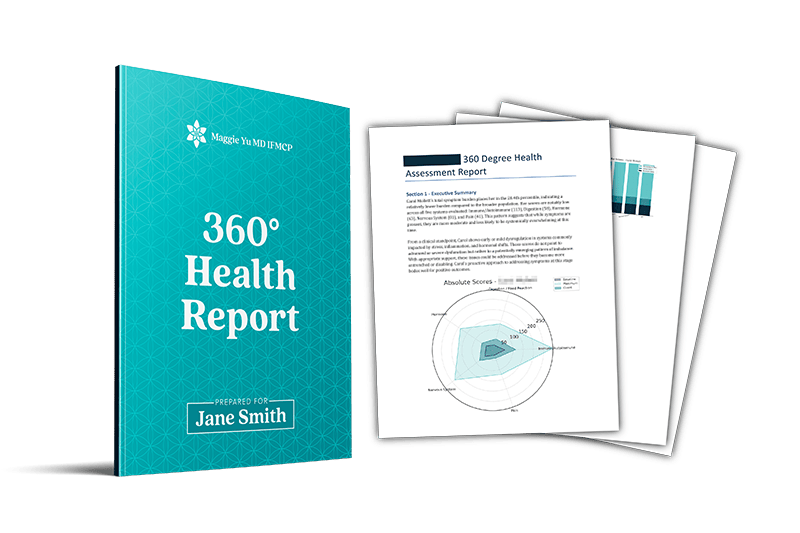
Take The 360° Health Assessment
Our 360° Health Assessment is designed for individuals ready to understand their health and take the next step forward.
The Autoimmune Symptom Clusters Doctors Overlook
If you want earlier answers, stop looking at isolated symptoms.
Look at clusters.
Thyroid + Hormone Cluster
Postpartum depression
Early menopause
PCOS
Heavy bleeding, fibroids, endometriosis
Thyroid nodules
Eyebrow thinning
Hair loss
The immune system frequently targets hormone-producing organs.
Hormone dysfunction is often immune-driven.
Pain + Connective Tissue Cluster
Fibromyalgia
Chronic tendonitis
TMJ
Hypermobility
Recurrent injuries
Sciatica
Carpal tunnel
Neck instability
Mixed connective tissue patterns are often autoimmune, even when labs are negative.
Gut + Motility Cluster
Chronic constipation
Diarrhea
Gastroparesis
Nausea after eating
Food reactions that change
Connective tissue lines the gut.
Immune attack there affects digestion.
Histamine + MCAS Cluster
Hives
Itching
Flushing
Sudden food intolerance
Worse after viral infections
Dizziness after eating
Histamine intolerance and MCAS are immune dysregulation patterns, not just allergies.
Viral Triggers and Autoimmune Disease
Many autoimmune cases trace back to:
Epstein-Barr virus (mono)
Shingles
Lyme
COVID
Long haul viral syndromes
Viruses can reprogram the immune system.
They don’t always cause autoimmune disease, but they often trigger immune dysregulation in genetically susceptible individuals.
If your symptoms began after a viral infection, that matters.
Autoimmune Disease Develops Over Decades
Autoimmune disease rarely begins suddenly.
It builds.
Here’s an example of a common timeline we see:
PCOS at 15
Mono at 17
Postpartum depression at 28
Fibromyalgia at 35
Borderline thyroid antibodies at 40
POTS at 45
Lupus diagnosis at 60
That is not six separate diseases.
That is one immune system pattern evolving.
Waiting for a formal diagnosis often means waiting for organ damage.
Online Training
A New Look at Autoimmune Healing
Research-backed insights into rheumatoid arthritis, Hashimoto’s, lupus, fibromyalgia, and more.
How to Shorten the Autoimmune Diagnosis Timeline
1. Track Symptom Clusters
Notice what flares together.
2. Identify Triggering Events
Pregnancy. Surgery. Viral infection. Stress. Hormone shifts.
3. Review Family History
Thyroid disease. Diabetes. Lupus. RA. MS. “Mystery pain.” Early hysterectomy.
Autoimmune patterns run in families.
Do You Need an Official Diagnosis to Start Healing?
No. You need:
- Pattern recognition
- System-level immune evaluation
- Immune rehabilitation strategy
You do not need to wait for a catastrophic lab result.
You do not need permission to address immune dysfunction.
Frequently Asked Questions About Autoimmune Disease
Why are my autoimmune labs normal but I still feel sick?
Because testing only measures a small subset of immune targets and often detects late-stage disease.
Can autoimmune disease be reversed?
Immune dysregulation can be slowed, stabilized, and significantly improved when the underlying drivers are addressed.
Is fibromyalgia autoimmune?
Yes, fibromyalgia overlaps with autoimmune connective tissue patterns and immune dysregulation.
Is POTS related to autoimmune disease?
Yes, research supports autoimmune involvement in POTS and dysautonomia cases.
Can viral infections trigger autoimmune disease?
Yes. EBV, COVID, shingles, and other viral infections can shift immune regulation and trigger autoimmune patterns.
Ready for a 360 View of Your Health?
If your autoimmune symptoms have been dismissed, minimized, or misdiagnosed, the next step is not another isolated specialist.
It is a full-system evaluation.
A 360 Health Assessment helps:
- Identify immune pattern type
- Map symptom clusters
- Review viral triggers
- Assess hormone-immune connections
- Create a system-level strategy
Book your 360 Health Assessment here.
Autoimmune disease gets missed for years.
It doesn’t have to be missed in you.
Maggie Yu, MD IFMCP